PA EDitorial

PA EDitorial

Uncategorized

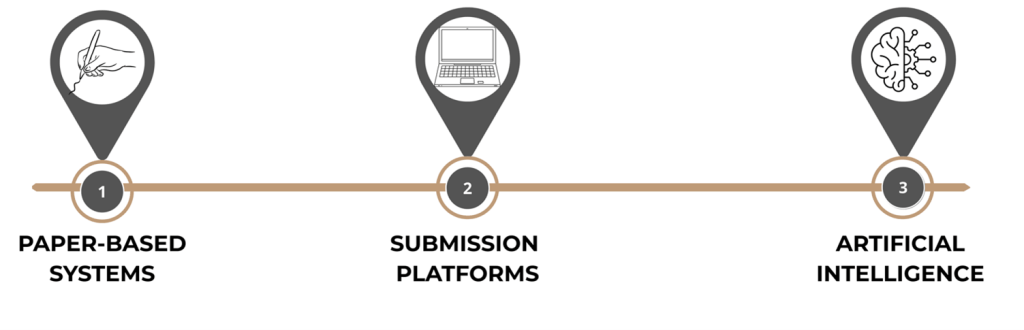
A horizontal timeline with three stages labelled: paper-based systems (handwriting icon), submission platforms (laptop icon), and artificial intelligence (brain icon), illustrating the evolution of peer review processes.

Three Eras of Peer Review: From Paper to Platforms to AI-Enabled Systems – Managing Change at Each Transition

The mechanics of peer review have changed many times over the last half-century, but arguably, its purpose hasn’t. Journals still rely on the same underlying idea: independent experts examine research before it becomes part of the scholarly record. The process is designed to protect credibility, test claims, and maintain a shared standard of rigour. This …

Three Eras of Peer Review: From Paper to Platforms to AI-Enabled Systems – Managing Change at Each Transition Read More »

Magnifying glass over a stack of manuscript papers on a desk, representing peer review, editorial scrutiny, and research integrity.

From Tippex to Tracking Systems: Peer Review, Trust, and AI in the First Quarter of the Twenty-First Century

In the year 2000, peer review was already deeply embedded in scholarly publishing, but the way it was practised reflected a very different set of assumptions about time, labour, and visibility. Manuscripts arrived physically or by email. Anonymisation was often done by hand. Corrections involved paper copies, Tippex, and careful retyping. And although editorial oversight …

From Tippex to Tracking Systems: Peer Review, Trust, and AI in the First Quarter of the Twenty-First Century Read More »

Megaphone against an orange background.

Why Feedback Matters: Trust, Scrutiny, and the Cost of Getting It Wrong

From peer review to performance management, feedback systems shape what gets corrected, what gets ignored, and what is allowed to persist. When those systems weaken – or are quietly automated – the consequences extend far beyond individual reactions. Providing feedback is often described as a ‘soft’ skill that good leaders and good reviewers should master. …

Why Feedback Matters: Trust, Scrutiny, and the Cost of Getting It Wrong Read More »

Research Output in the AI Era: Some Perspectives of the Scholarly Publishing Community

Artificial intelligence (AI) has driven a paradigm shift in scholarly publications. These profound changes have impacted all stakeholders in this community – the authors, readers, and publishers. As the AI era was dawning very early in this decade, I was already deeply involved in the scholarly publishing industry. At that time, I was working as …

Research Output in the AI Era: Some Perspectives of the Scholarly Publishing Community Read More »

When the Curtains Open: What Transparent Peer Review Really Changes

Transparent peer review has become the industry’s latest approach towards openness – a promise that publishing decisions are no longer made behind closed doors. But as more journals adopt it, the question isn’t only how it works; it’s what it really changes for editors, reviewers, and authors inside the system. For most of its history, …

When the Curtains Open: What Transparent Peer Review Really Changes Read More »

Peer Review: What It Really Needs, and Why Publishers Turn to PA EDitorial the Most Trusted Peer Review Provider

With automation reshaping so many aspects of publishing, I believe the role of experienced peer review support has never been more critical. Technology can help – it can streamline and scale, but it can’t replace editorial judgement, and it can’t earn trust.  Why the People Matter The teams with deep, consistent experience are the ones …

Peer Review: What It Really Needs, and Why Publishers Turn to PA EDitorial the Most Trusted Peer Review Provider Read More »

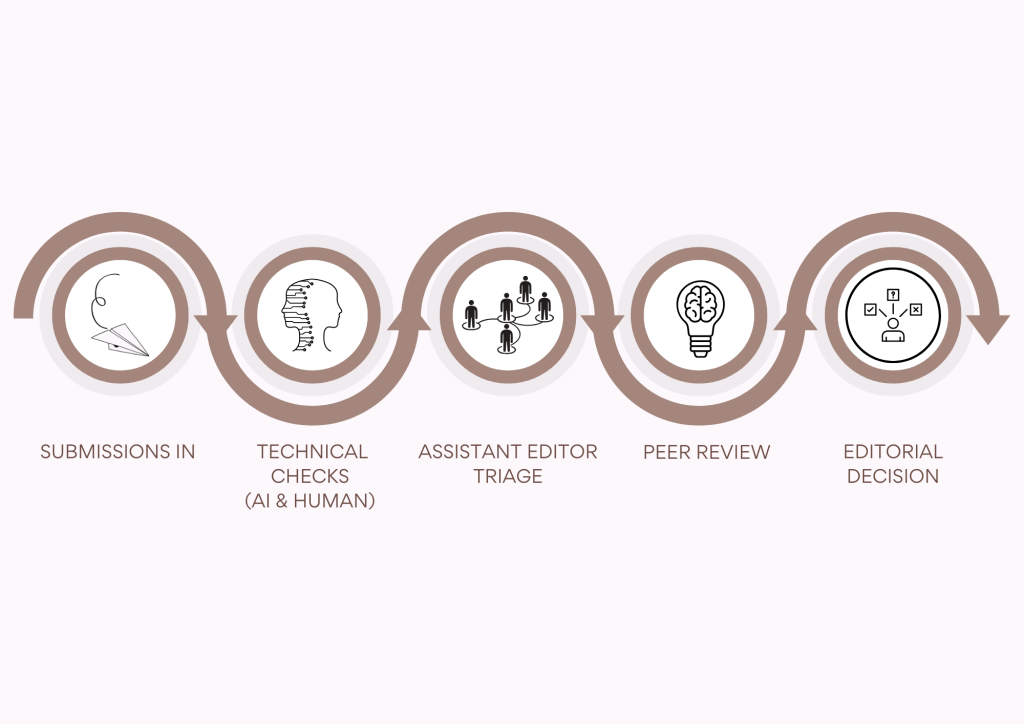
Assistant Editor Triage Before Peer Review: A Practical Response to the Reviewer Shortage Crisis in the AI Era 

Sarah Hands, Operations Manager, PA EDitorial  The shortage of qualified peer reviewers is not new, but the ‘crisis’ is intensifying. Rising international research output, increasing expectations for fast turnaround of manuscripts, and limited recognition for reviewers have all contributed to ‘reviewer fatigue’. Now, the rapid adoption of AI tools in research and writing is adding further …

Assistant Editor Triage Before Peer Review: A Practical Response to the Reviewer Shortage Crisis in the AI Era  Read More »

The Developing Role of Peer Review Management Companies in the Age of AI-Powered Research Integrity Tools

Lizi Dawes, CEO, PA EDitorial Last year, when I first stepped into the ALPSP Conference, I walked in not quite knowing what to expect, and found myself in a room full of people who spoke the same language of publishing pressures and possibilities. It felt less like a conference and more like a check-in; a …

The Developing Role of Peer Review Management Companies in the Age of AI-Powered Research Integrity Tools Read More »

What Leading Through AI Integration Has Taught Me About Peer Review

When the first serious conversations about artificial intelligence (AI) in peer review began, my instinct was the same as many people’s: curiosity, mixed with a healthy dose of scepticism. It wasn’t that I doubted the technology could do impressive things – it’s that I’ve been in academic publishing long enough to know that impressive is …

What Leading Through AI Integration Has Taught Me About Peer Review Read More »

How Is AI (Really) Changing Peer Review: And Do Humans Still Matter?

Ask most people what they think of peer review, and you’ll hear a mix of respect and realism. It sits at the very heart of academic publishing – a powerful way to uphold rigour and advance knowledge. But it’s also demanding. Authors may wait months for feedback. Reviewers tackle intricate analyses alongside their own research. …

How Is AI (Really) Changing Peer Review: And Do Humans Still Matter? Read More »