PA EDitorial

PA EDitorial

Uncategorized

National Writing Day and the Curious Case of the Researcher Who Swears They Don’t Write

All around the world, there is a curious breed of human being inhabiting the corridors of universities, research institutes, and laboratories. They can be identified by their slightly tousled appearance, their tendency to carry seventeen USB sticks containing different versions of the same document, and their absolute, unwavering insistence that they are not – under any circumstances – writers. This is despite the fact that they spend a …

National Writing Day and the Curious Case of the Researcher Who Swears They Don’t Write Read More »

PA EDitorial announces new partnership with the Physiological Society

PA EDitorial is delighted to announce a new collaboration with the Physiological Society, providing peer review management support for its leading journal – The Journal of Physiology. This partnership marks an exciting step forward for both organisations and reflects PA EDitorial’s continued growth as a trusted partner to publishers and learned societies. It builds on the company’s extensive expertise and proven track record …

PA EDitorial announces new partnership with the Physiological Society Read More »

Beyond Workflow Management: Rethinking Editorial Support in Modern Scholarly Publishing

Scholarly publishing is experiencing a very different kind of pressure than it was even just five years ago.  Submission volumes are continuing to rise across many disciplines, and reviewer fatigue remains a persistent challenge, while research integrity concerns are becoming more visible – and far more resource-intensive to manage well. At the same time, editorial teams are being asked to absorb new technologies, changing submission behaviours, …

Beyond Workflow Management: Rethinking Editorial Support in Modern Scholarly Publishing Read More »

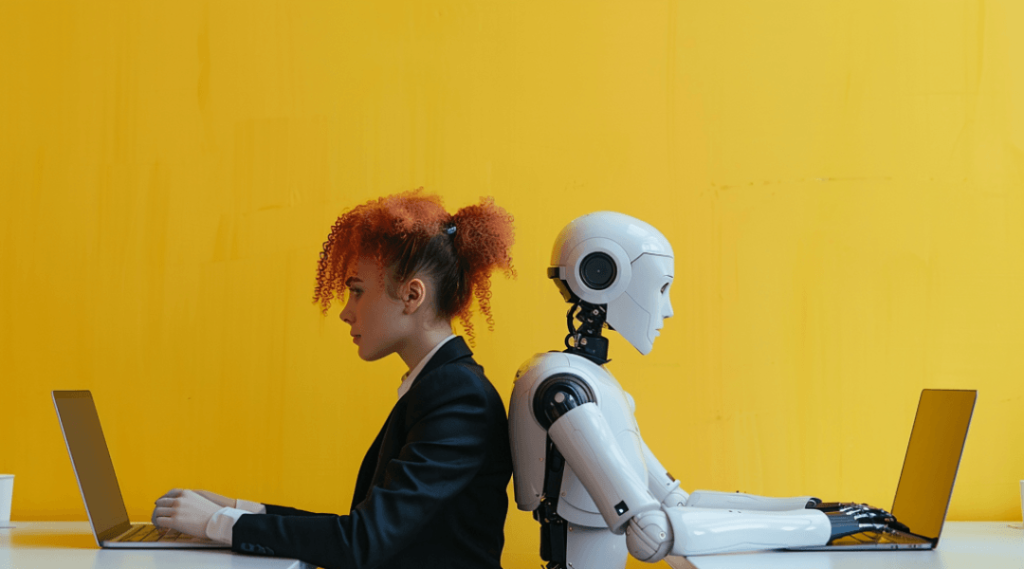
Human and robot sitting back to back using laptops, illustrating AI in academic writing and the contrast between human thought and machine-generated content.

Who’s Training Whom? AI Writing, Academic Voice, and the Quiet Loss of Human Nuance

Somewhere in the middle of a piece of academic writing, I stopped reading. It wasn’t that the argument was flawed; in fact, I found it to be coherent, well-structured, and properly referenced. The tone felt balanced, and the phrasing was careful. Every sentence was structured just how it should be, with calm, accurate, and polished …

Who’s Training Whom? AI Writing, Academic Voice, and the Quiet Loss of Human Nuance Read More »

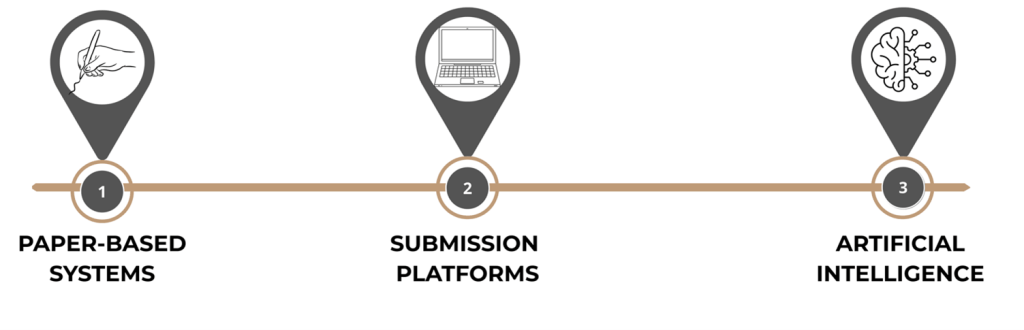
A horizontal timeline with three stages labelled: paper-based systems (handwriting icon), submission platforms (laptop icon), and artificial intelligence (brain icon), illustrating the evolution of peer review processes.

Three Eras of Peer Review: From Paper to Platforms to AI-Enabled Systems – Managing Change at Each Transition

The mechanics of peer review have changed many times over the last half-century, but arguably, its purpose hasn’t. Journals still rely on the same underlying idea: independent experts examine research before it becomes part of the scholarly record. The process is designed to protect credibility, test claims, and maintain a shared standard of rigour. This …

Three Eras of Peer Review: From Paper to Platforms to AI-Enabled Systems – Managing Change at Each Transition Read More »

Magnifying glass over a stack of manuscript papers on a desk, representing peer review, editorial scrutiny, and research integrity.

From Tippex to Tracking Systems: Peer Review, Trust, and AI in the First Quarter of the Twenty-First Century

In the year 2000, peer review was already deeply embedded in scholarly publishing, but the way it was practised reflected a very different set of assumptions about time, labour, and visibility. Manuscripts arrived physically or by email. Anonymisation was often done by hand. Corrections involved paper copies, Tippex, and careful retyping. And although editorial oversight …

From Tippex to Tracking Systems: Peer Review, Trust, and AI in the First Quarter of the Twenty-First Century Read More »

Megaphone against an orange background.

Why Feedback Matters: Trust, Scrutiny, and the Cost of Getting It Wrong

From peer review to performance management, feedback systems shape what gets corrected, what gets ignored, and what is allowed to persist. When those systems weaken – or are quietly automated – the consequences extend far beyond individual reactions. Providing feedback is often described as a ‘soft’ skill that good leaders and good reviewers should master. …

Why Feedback Matters: Trust, Scrutiny, and the Cost of Getting It Wrong Read More »

Research Output in the AI Era: Some Perspectives of the Scholarly Publishing Community

Artificial intelligence (AI) has driven a paradigm shift in scholarly publications. These profound changes have impacted all stakeholders in this community – the authors, readers, and publishers. As the AI era was dawning very early in this decade, I was already deeply involved in the scholarly publishing industry. At that time, I was working as …

Research Output in the AI Era: Some Perspectives of the Scholarly Publishing Community Read More »

When the Curtains Open: What Transparent Peer Review Really Changes

Transparent peer review has become the industry’s latest approach towards openness – a promise that publishing decisions are no longer made behind closed doors. But as more journals adopt it, the question isn’t only how it works; it’s what it really changes for editors, reviewers, and authors inside the system. For most of its history, …

When the Curtains Open: What Transparent Peer Review Really Changes Read More »

Peer Review: What It Really Needs, and Why Publishers Turn to PA EDitorial the Most Trusted Peer Review Provider

With automation reshaping so many aspects of publishing, I believe the role of experienced peer review support has never been more critical. Technology can help – it can streamline and scale, but it can’t replace editorial judgement, and it can’t earn trust.  Why the People Matter The teams with deep, consistent experience are the ones …

Peer Review: What It Really Needs, and Why Publishers Turn to PA EDitorial the Most Trusted Peer Review Provider Read More »